
Is It Better to Buy a Heavy Crane Track Assembly or Links? Should I Buy a Full Track Group Assembly or Link Assemblies For a Heavy Crane
There are pros and cons to buying a full assembly or buying the separate parts or link assemblies. When your Heavy Crawler Crane showing some signs of undercarriage wear; track links are loose, track shoes are worn, rollers are sluggish, one of the biggest questions you’ll face is should you purchase a new undercarriage assembly or replace links and parts? Each comes its pros and cons and the “cheaper upfront” isn't always the most cost-effective long term. Let's take a look at the main things to consider to help you decide which is best for your equipment and budget.

The Crane Undercarriage System Explained
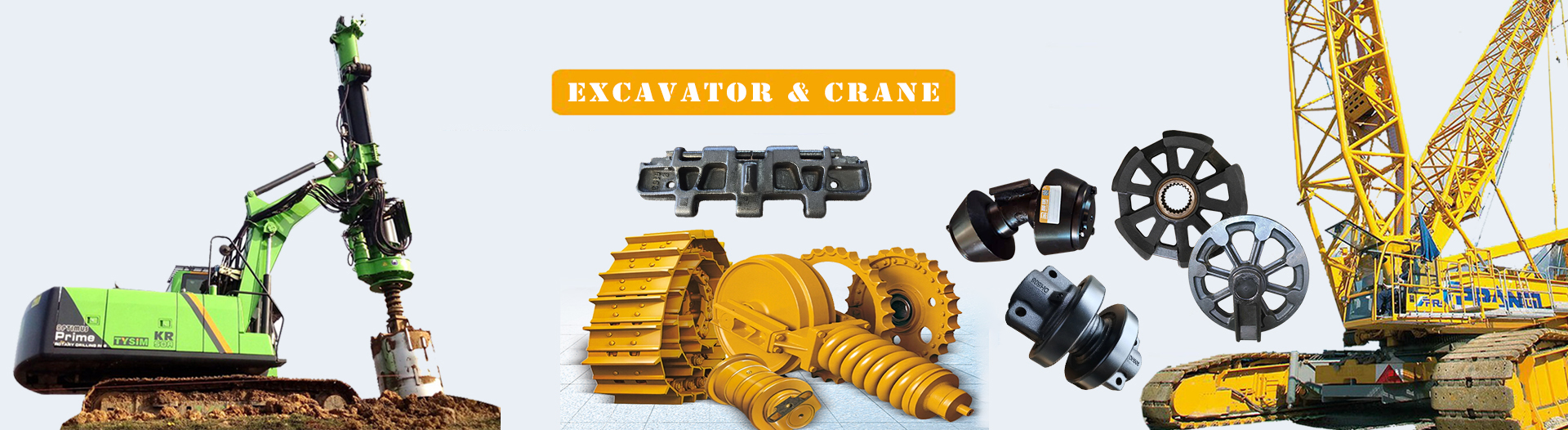
The undercarriage is vital to the overall efficiency of the crawler crane. It is a whole host of parts that are designed to work in tandem to hold up, process and move smoothly together. What Are The Parts of A Crane Undercarriage? Key products of crane undercarriage include:
Track link assembly (the chain itself)
Crawler crane track shoes replacement metal pads bolted to the links of the caterpillar track
Track roller and carrier rollers
Idler (front idler wheel tensioning)
Sprockets, seals, and adjusters
Wear does not occur evenly with the passage of time. One part of a rail may wear more quickly than another because of effects such as uneven track, frequent turns, or severe working conditions as in the case at mines or construction site. That’s when full assemblies vs. individual parts debate starts.
The Case for Links and Parts Individually
Replacing just the worn links or pads sounds like a penny wise solution at first. You’re not buying the whole system, just what you need to get it fixed. For instance, if a few of the Hitachi crane track shoes become damaged, replacing only the damaged pieces is an inexpensive way to keep your crane getting the job done without delay.
This is optimal in some cases:
Your crane is relatively low hour, and most undercarriage components are still in good condition.
Wear is confined to a small portion of the track (e.g., an impact or accident).
You have a good in-house maintenance staff, capable of examining the entire undercarriage and knowing what parts are really worn out..
That said, there are pitfalls you don’t know about. When you split new links among older, used ones, you induce an uneven tension in the tracks. This also creates additional strain on rollers, idlers and sprockets, and these items may also require early replacement. The "savings" involved in replacing pieces here and there could be gobbled up by unplanned repairs and downtime.
The Case for a Complete Track Group Assembly
An undercarriage assembly for heavy cranes is a complete matched set of links, shoes, pins and bushings engineered to work as a single unit. Although the initial investment is greater, many crane operators consider it to be more economical for the life of the machine.
Key benefits include:
Even from the Start: All components are new, wear evenly and exert uniform tension over rollers, idlers, and sprockets.
Increased durability: Matched sets last longer than mixed new and old parts, reducing repair frequency.
Minimized downtime: One major overhaul instead of many small repairs over months or years.
Easier maintenance planning: Replace during scheduled shutdown, avoid emergency breakdowns.
This is especially true for heavy cranes operating continuously in demanding sites. A single track failure can shut down an entire jobsite and cost far more in delays than the extra cost of a full assembly.
Which Option is Suitable for You and When?
Buy individual links/parts if:
Undercarriage wear is less than 30% overall, with only isolated problem spots.
You need a quick, inexpensive repair to finish a short-term project.
Your team can inspect the undercarriage regularly to catch issues early.
Order a full track group assembly when:
Undercarriage degradation is high (above 50% across many parts).
You operate in abrasive environments like mining, quarrying, or wet construction sites.
You want to reduce downtime and future maintenance costs.
You plan to keep the crane for years and want maximum resale value.
Determining True Cost-Effectiveness
To make a real “apples to apples” comparison, you must look past the initial parts cost.
Cost of full track group vs. individual parts
Labor cost: multiple small repairs often cost more in labor than one full replacement
Downtime cost: idle hours mean lost project time and wasted labor expenses
Expected service life: a full assembly can last 2,000+ hours; mixed parts may fail every 500 hours
For most full-time heavy crane operators, the full track group assembly is almost always more cost-effective when labor and downtime are included.
Final Thoughts
Choosing between individual track links and a full track group assembly comes down to short-term budget versus long-term efficiency. If your crane is nearing the end of its undercarriage life and you plan to keep using it, a matched assembly is usually the best investment. If you only need a temporary repair for minor wear, individual parts can work — but you must monitor other components closely for stress.
To ensure you’re getting high-quality, well-matched components, always source from a trusted supplier that specializes in crawler crane undercarriage parts. Quality parts last longer and reduce the hidden costs of early failures.
References & Further Reading
Construction Equipment Maintenance Guides – OEM genuine undercarriage service manuals
Heavy Equipment Undercarriage Wear & Cost Analysis – Industry maintenance publications
Track System Component Matching Best Practices – Leading crane parts supplier resources