
How to Choose Durable Track Rollers and Crane Undercarriage Parts for Heavy-Duty Projects
For crawler cranes, large excavators, drilling rigs and other heavy machines, the undercarriage is not just a group of steel parts under the frame. It carries the whole machine, keeps the equipment stable, and allows it to move safely across rough ground. When one part wears too fast, the problem rarely stays small.
A damaged track roller can affect the track chain. A loose sprocket can speed up wear on the track shoes. A poor seal can let mud, water and sand enter the roller, causing oil leakage and bearing failure. For contractors, rental companies, machinery dealers and repair shops, these failures often mean downtime, delayed projects and higher maintenance costs.
This guide explains how to choose durable track rollers and reliable crane undercarriage parts for heavy-duty projects, especially in demanding markets such as the USA and Indonesia. It also covers common failure causes, working-condition differences, and what buyers should check before placing an order.

Why the Undercarriage Matters More Than Many Buyers Think
Many buyers first look at the engine, hydraulic system or lifting capacity when checking a crawler crane or excavator. The undercarriage is often checked later. In real jobsite conditions, however, the undercarriage is one of the most expensive systems to maintain.
It works close to the ground every day. It faces impact, dust, rocks, wet soil, abrasive sand and uneven terrain. On mining sites, port projects, road construction and foundation work, the undercarriage may run for long hours under heavy loads.
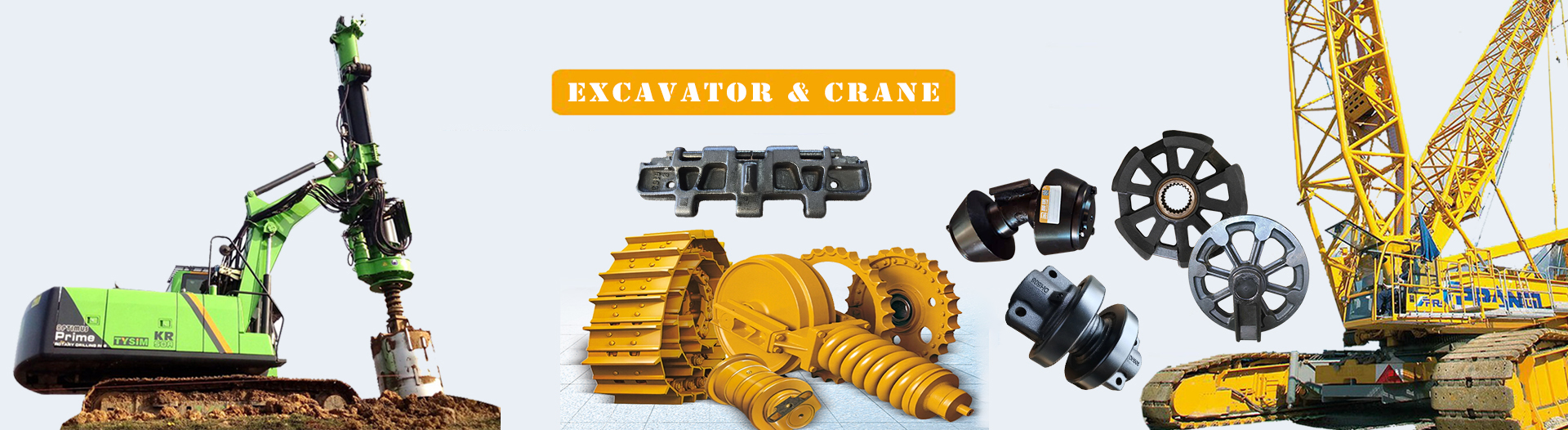
A complete crane undercarriage system usually includes:
Track rollers
Carrier rollers
Sprockets
Front idlers
Track chains
Track shoes
Track frames
Tensioning components
These parts must work together. If one component has poor dimensional accuracy or weak material strength, it can cause abnormal wear across the whole system. That is why experienced buyers do not only ask for a low price. They also check material, heat treatment, sealing structure, part matching and warranty terms.
What Does a Track Roller Do?
The track roller, also called a bottom roller or lower roller, is one of the main load-bearing components in the undercarriage. It is mounted along the lower track frame and supports the weight of the machine.
During operation, the track roller guides the track chain and helps the machine move smoothly. It also spreads the machine weight across the track system, reducing direct pressure on individual contact points.
In heavy-duty crane and excavator applications, track rollers work under constant pressure. They must resist surface wear, side impact and internal bearing stress. A good track roller should have strong steel, proper heat treatment and reliable sealing. If any of these details are ignored, the roller may fail much earlier than expected.
Common signs of track roller problems include oil leakage, uneven wear, abnormal noise, roller shell cracking and excessive movement. Once these signs appear, buyers should also inspect the track chain, sprocket and idler, because wear often spreads from one part to another.
USA and Indonesia: Different Working Conditions, Different Priorities
The USA and Indonesia are both important markets for heavy equipment, but their working conditions are not the same. A part that performs well in one environment may need different treatment or stronger protection in another.
USA: Heavy Loads, Long Working Hours and Strict Part Matching
In the United States, crawler cranes and large excavators are widely used in infrastructure, mining, bridge work, energy projects, road construction and commercial building projects. Many machines operate for long shifts, especially in rental fleets and mining applications.
Buyers in this market usually pay close attention to service life, part compatibility, stable stock and delivery time. Repair shops and dealers also need accurate part matching, because one wrong roller or sprocket can delay installation and increase labor costs.
According to the U.S. Bureau of Labor Statistics, construction remains one of the country’s major equipment-intensive industries. This creates continuous demand for replacement undercarriage parts, especially for machines working in harsh or high-hour applications.
Indonesia: Mud, Rain, Humidity and Abrasive Soil
Indonesia has a tropical climate with high humidity and frequent rainfall. Many machines work in muddy construction sites, mining areas, ports and infrastructure projects. Wet soil, sand and fine abrasive particles can enter weak sealing systems and damage bearings quickly.
For this reason, Indonesian buyers often focus more on sealing performance, anti-corrosion treatment and wear resistance. A track roller may look strong from the outside, but if the seal is weak, water and mud can shorten its life significantly.
For projects in rainy or muddy environments, buyers should ask about floating oil seals, lubrication quality, anti-rust protection and packing methods before shipment.
How to Choose Durable Track Rollers
A durable track roller is not judged only by its weight or appearance. The details inside the part matter more. Before buying, check the following points carefully.
1. Steel Material
High-quality track rollers are usually made from forged steel or high-strength alloy steel. Common materials include 40Cr and 45# steel, depending on product design and application. Compared with low-grade cast steel, these materials provide better strength, impact resistance and wear performance.
For heavy-duty equipment, material consistency is important. If the roller surface is too soft, it will wear quickly. If it is too brittle, it may crack under shock load. A balanced material and heat treatment process helps the roller work longer and more safely.
2. Heat Treatment
Heat treatment affects the working life of the roller. Quenching and tempering improve surface hardness while keeping enough toughness inside the part. This balance is important because undercarriage parts need to resist both wear and impact.
Buyers can ask suppliers for hardness test photos, inspection records or production details. These documents are especially useful when ordering in bulk or purchasing parts for demanding jobsite conditions.
3. Sealing Structure
The seal is one of the most important parts of a track roller. A good floating oil seal keeps lubricant inside and prevents mud, water, dust and sand from entering the bearing area.
In wet conditions, poor sealing can cause fast internal damage. In dry and dusty conditions, fine particles can also enter the roller and damage the bearing. This is why sealing quality matters in both the USA and Indonesia.
4. Load-Bearing Capacity
Different machines require different roller structures. Large crawler cranes and heavy excavators need stronger load-bearing designs. Some applications require double-row bearing structures, while lighter machines may use standard roller designs.
Buyers should select the roller based on machine model, working weight, ground condition and daily working hours. Choosing only by size or price may lead to early failure.
5. Dimensional Accuracy
Even a small dimensional difference can cause installation problems. Important measurements include roller diameter, shaft size, flange width, mounting distance and overall length.
Before production or shipment, buyers should confirm the machine model, part number, drawing or sample. Accurate matching reduces installation risk and helps avoid abnormal wear after assembly.
Common Causes of Undercarriage Failure
Undercarriage failure is not always caused by one bad part. It often comes from a combination of wear, poor maintenance, wrong installation and harsh working conditions.
Common causes include:
Poor sealing and oil leakage
Low-grade raw material
Insufficient heat treatment
Incorrect part matching
Overloading or long working hours
Working in mud, sand or sharp rock for long periods
Improper track tension
Delayed replacement of worn parts
One useful maintenance habit is to inspect the undercarriage as a complete system, not as separate parts. If a track roller fails, check the track chain and sprocket. If the idler shows abnormal wear, check track tension and alignment. This approach can prevent repeated failures.
How to Evaluate a Reliable Crane Undercarriage Parts Supplier
Choosing the right supplier can reduce many problems before they happen. A reliable supplier should understand both product manufacturing and real working conditions.
Before placing an order, buyers should check whether the supplier can provide:
Accurate part matching by model, part number, drawing or sample
Clear material and heat treatment information
Inspection photos or quality control records
Stable stock for common track rollers, sprockets, idlers and track chains
Export packing suitable for long-distance shipping
Reasonable warranty and after-sales support
For international buyers, communication speed also matters. If a machine is stopped on site, waiting too long for confirmation can be costly. A good supplier should respond quickly, confirm details carefully and avoid unclear promises.
Why Buyers Work with SHUNQI TRACK
SHUNQI TRACK focuses on heavy-duty undercarriage parts for crawler cranes, excavators and related construction machinery. Our product range includes track rollers, carrier rollers, sprockets, idlers, track chains and track shoes.
We support part matching by machine model, part number, drawing or sample. For buyers in the USA, Indonesia and other markets, our team can recommend suitable undercarriage parts based on working conditions, machine type and order quantity.
With more than 20 years of manufacturing experience, SHUNQI TRACK pays close attention to material selection, heat treatment, sealing quality and dimensional accuracy. We also provide export packing, flexible order support and quality inspection before shipment.
Our goal is simple: help dealers, repair shops and equipment owners reduce downtime and keep machines working in tough conditions.
Request a Quote
If you need track rollers or other crane undercarriage parts, send us your machine model, part number, drawing or sample photos. Our team will help confirm the correct parts and provide a quotation.
WhatsApp: +86 185 5958 7739
FAQ
What parts are included in a crane undercarriage system?
A crane undercarriage system usually includes track rollers, carrier rollers, sprockets, idlers, track chains, track shoes, track frames and tensioning parts.
What is the function of a track roller?
A track roller supports the machine weight, guides the track chain and helps the crawler crane or excavator move smoothly across the ground.
Why do track rollers fail early?
Early failure is often caused by poor sealing, low-grade material, weak heat treatment, overloading, wrong installation or harsh ground conditions such as mud, sand and rock.
What should buyers check before ordering undercarriage parts?
Buyers should confirm the machine model, part number, dimensions, material, heat treatment, seal type, warranty and packing method before placing an order.
Are undercarriage parts for Indonesia different from those for the USA?
The basic structure can be similar, but Indonesia’s muddy and humid conditions require stronger sealing and anti-corrosion protection. USA heavy-duty projects often focus more on load capacity, long service life and accurate part matching.