
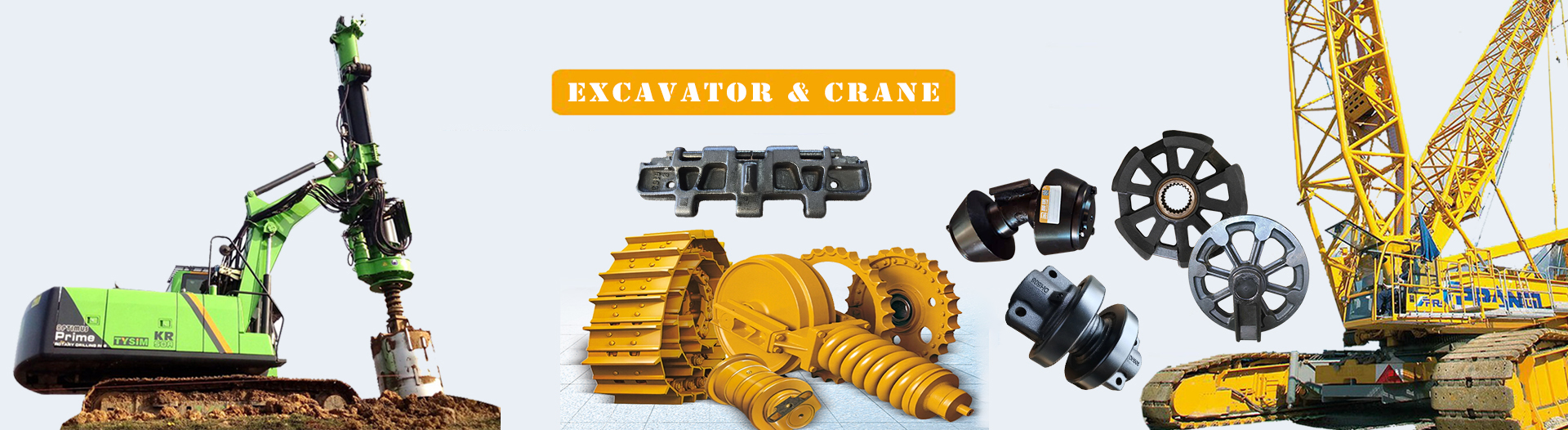
Heavy Duty Track Roller Assembly: Structure & Wear Causes Guide
When managing heavy construction machinery, the undercarriage system is often a case of "out of sight, out of mind"—until a critical component fails. Among these parts, the heavy duty track roller assembly carries the literal weight of your operations. Operating in mud, rock, and abrasive grit, these components endure extreme stress. For fleet managers and operators, understanding how these rollers are built and why they wear out isn't just technical trivia—it is the key to preventing catastrophic downtime and slashing maintenance costs.
Inside the Machine: The Component Structure of Heavy Duty Track Roller Assembly
To appreciate how a track roller survives thousands of hours under a 40-ton excavator, we need to look beneath its rugged exterior. A premium heavy duty track roller assembly is a masterpiece of mechanical engineering, typically divided into five core components:
1. The Wheel Body (Shell)
The outermost shell that directly contacts the track links. High-quality rollers utilize forged alloy steel that undergoes deep induction hardening. This ensures the exterior can resist intense friction while the inner core remains ductile enough to absorb heavy impacts without cracking.
2. The Support Wheel Shaft (Axle)
The backbone of the assembly. The shaft distributes the vehicle's immense weight evenly to the frame. It must be precision-ground and heat-treated to achieve optimal surface hardness.
3. The Shaft Sleeve (Bushing)
Acting as the sacrificial layer, the sleeve reduces friction between the rotating wheel body and the stationary shaft. Most heavy-duty systems use bimetal or specialized copper alloy bushings to ensure smooth rotation under high load capacities.
4. The Floating Sealing Ring (Duo-Cone Seals)
The unsung heroes of the undercarriage. These mirror-surface mechanical seals keep critical lubricants inside the roller while completely locking out destructive dirt, water, and abrasive grit.
5. The End Cap and Collar
These components secure the internal architecture and provide mounting points to the track frame, ensuring perfect alignment during operation.
The Golden Rule of Undercarriage Quality: If the hardness of the axle and shaft sleeve of the heavy wheel you choose is not up to industry standards, it will trigger rapid, premature wear. Consequently, the floating seals will fail, leading to severe oil leakage just less than a few days after installation.
Excavator Track Roller Wear Causes and Undercarriage Damage
The crawler excavator walking mechanism bears 100% of the excavator's weight and is entirely responsible for its driving and maneuvering functions. Because it operates dynamically on uneven terrain, wear is inevitable. However, abnormal or accelerated wear points to deeper systemic issues.
When analyzing excavator track roller wear causes, engineers look closely at specific friction zones. Undercarriage damage is almost always concentrated in the following high-contact parts:
Drive Wheel Teeth and Track Pin Sleeve: The constant engagement and disengagement between the sprocket teeth and the pin sleeves generate intense grinding forces, especially when packed with dry soil or packed mud.
The Guide Wheel (Idler) and Track Joint Raceway: If the track tension is incorrect, the idler will misalign, causing uneven, rapid wear across the track link raceway surface.
Support Wheel (Track Roller) and Track Link Section: As the excavator travels, the rollers constantly hammer against the track links. Rocks trapped between these surfaces accelerate pitting and gouging.
Sprocket and Track Track Joint Raceway Surface: Misalignment between the frame and the track chain causes the sprocket sides to shave off the edges of the track joints.
Track Pin and Pin Sleeve Inner Contact Surface: This internal wear causes the track chain to stretch over time, a phenomenon commonly referred to as "track pitch extension."
Track Plate (Shoes) and Ground Contact: Constant tracking over hard bedrock or concrete surfaces rounds off the grousers, drastically reducing traction and stability.

Proactive Maintenance: How to Extend the Lifespan of Your Undercarriage Parts
Replacing an undercarriage is one of the most expensive maintenance events in an excavator’s lifecycle. Fortunately, you can minimize the excavator track roller wear causes listed above by implementing a few daily habits:
First, clean your undercarriage daily. Dried mud and debris act like sandpaper inside the roller assemblies and pack tightly into the sprocket teeth, increasing tension unnecessarily.
Second, monitor track tension closely. A track that is too tight creates massive parasitic loads on the rollers and idlers, burning more fuel and accelerating bushing wear. Conversely, a track that is too loose will cause misalignment and dangerous track jumping.
Finally, invest in high-quality parts. When sourcing replacement parts, always partner with suppliers who guarantee strict heat-treatment processes for their heavy duty track roller assembly lines. Saving a few dollars upfront on cheap rollers almost always guarantees an expensive repair bill down the road.
Contact Us | Wechat 
|